Women in Politics: Changing Narratives, Changing Nations
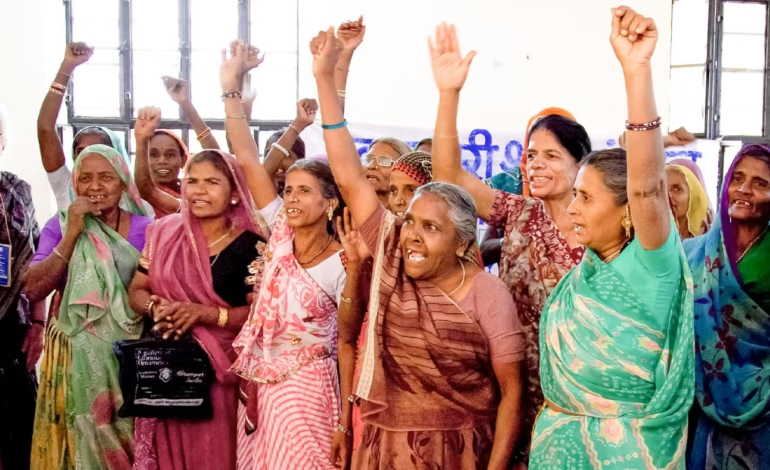
Politics has long been male-dominated, but women’s increasing participation is reshaping global narratives. Countries with greater female political representation show stronger investments in health, education, and social welfare.
Yet, the road is tough. Women candidates face sexism, online abuse, and violence. In India, the Women’s Reservation Bill (2023) promises 33% reservation in legislatures, but actual implementation remains years away.
Globally, Rwanda stands out, with women holding over 60% of parliamentary seats. This has translated into progressive policies on healthcare and gender equity. In contrast, even developed democracies like the U.S. still struggle to achieve proportional representation.
Why women in politics matter:
- Women leaders prioritize inclusive policies.
- Presence of women in decision-making challenges patriarchal power.
- Young girls find role models in female leaders.
The biggest hurdles remain political funding, party gatekeeping, and cultural stereotypes. Parties often nominate women in “losing seats,” treating their candidacy as symbolic.
To build equality:
- Quota implementation must be accelerated.
- Capacity-building for young women leaders is crucial.
- Media accountability is needed to stop sexist portrayal.
- Safety and online protection must be strengthened.
Women in politics aren’t just “adding diversity”, they are transforming governance. The narrative is shifting, but only sustained reforms can ensure parity.
References:
- Inter-Parliamentary Union (IPU) Reports 2024
- UN Women, Women in Politics Data